
Carpet Tile Installation in Grand Rapids, Jenison & West Michigan
Durable • Modern • Modular Carpet Systems for Offices, Basements, Retail Spaces & High-Traffic Interiors
Professional carpet tile installation with strong subfloor prep, layout planning, clean seams, moisture-aware recommendations, and long-term performance in mind.
Professional Carpet Tile Installation Near Grand Rapids
If you are searching for carpet tile installation in Grand Rapids, Jenison, Grandville, Hudsonville, Wyoming, Kentwood, Walker, Zeeland, Holland, or nearby West Michigan communities, Local Flooring Installation provides modular carpet solutions built for durability, style flexibility, and practical long-term maintenance.
Carpet tile flooring has become one of the smartest flooring options for offices, finished basements, home offices, apartment common areas, retail environments, schools, medical spaces, and busy residential rooms because it combines comfort with easier replacement and design flexibility. Unlike broadloom carpet, modular carpet tile lets property owners replace damaged sections instead of removing an entire room of flooring.
Industry organizations like the FCICA, the Carpet and Rug Institute, and CFI all emphasize the importance of proper installation, substrate preparation, and ongoing maintenance planning when it comes to floorcovering performance.
Why Carpet Tile Flooring Works So Well
Carpet tile flooring has grown in popularity because it solves a lot of real-world problems. In spaces where traffic is heavy, spills happen, maintenance matters, or future replacement flexibility is important, carpet tile offers practical advantages over traditional wall-to-wall carpet.
- Easy section replacement: swap out individual damaged tiles instead of replacing the entire floor
- Commercial-grade durability: ideal for offices, corridors, reception areas, and shared spaces
- Design flexibility: available in squares, planks, monolithic layouts, quarter-turn patterns, ashlar patterns, and custom mixes
- Faster installation potential: often more efficient than broadloom in many layouts
- Strong fit for basements and lower-level spaces: especially where smart maintenance planning matters
- Great for phased upgrades: modular systems are easier to repair or update over time
- Useful for rental and commercial environments: where wear patterns are common and downtime matters
The Carpet and Rug Institute provides testing and certification resources for carpet performance, while the IICRC provides education around inspection, cleaning, and restoration standards that affect long-term floor appearance and care.
Our Carpet Tile Installation Services
Commercial Carpet Tile Installation
Office buildings, conference rooms, retail spaces, waiting rooms, mixed-use properties, apartment common areas, and professional spaces designed for heavy traffic and a clean finished appearance.
Residential Carpet Tile Installation
Finished basements, playrooms, home offices, workout rooms, rec rooms, mudroom-adjacent spaces, and other rooms where replaceable comfort matters.
Basement Carpet Tile Installation
Moisture-aware planning for basement flooring where homeowners want warmth, design flexibility, and easier replacement options over time.
Carpet Tile Replacement & Repairs
Replace damaged or stained sections, refresh worn traffic areas, and improve flooring performance without a full tear-out whenever the product and conditions allow.
Glue-Down Carpet Tile Systems
A strong choice for many commercial settings where bond strength, pattern control, and long-term stability matter most.
Peel-and-Stick / Pressure-Sensitive Systems
Great for some residential and light commercial applications depending on the product, traffic level, and floor conditions.
Carpet Tile Installation in West Michigan: What Actually Matters
A lot of carpet tile pages focus only on style, but real performance starts with planning. Carpet tile may be modular, but that does not mean it is casual. The best-looking carpet tile floors come from disciplined layout, proper subfloor prep, product-specific adhesive strategy, clean cuts at perimeters, and a plan for the way people will actually use the room.
Whether the project is a professional office in Grand Rapids, a finished basement in Jenison, a lower-level family room in Hudsonville, a rental property in Wyoming, or a small commercial refresh in Kentwood, the installation approach should match the space. Some rooms need stronger bond strategy. Some need more attention to rolling loads or chair traffic. Some need moisture testing. Some need a pattern that hides wear and directional shading better over time.
What Are Carpet Tiles?
Carpet tiles, also called modular carpet, are individual carpet units installed piece by piece rather than as one large broadloom sheet. Common formats include square modules like 18×18 or 24×24 as well as plank-style products that create more modern design options.
One of the biggest advantages of modular carpet is maintenance flexibility. If a tile becomes stained, damaged, or excessively worn, it can often be replaced without removing the surrounding floor. That can be a major benefit in offices, tenant spaces, educational spaces, and family homes where isolated damage is more likely.
Why Carpet Tile Has Become So Popular
Carpet tile continues to grow because it hits a sweet spot between softness, design control, and practical maintenance. Traditional carpet can still be a good fit in some rooms, but carpet tile tends to win where flexibility matters. Business owners like it because sections can be replaced. Homeowners like it because it can look modern and feels more forgiving in certain rooms than hard-surface flooring.
- Excellent for offices and shared commercial spaces
- Useful for finished basements and rec rooms
- Strong option for home offices and kids’ spaces
- Good fit for apartment turnovers and rental upgrades
- Practical for corridors and heavily used rooms
- Can create high-end looks through pattern and color variation
The OSHA workplace safety site and commercial building guidance more broadly underscore why slip considerations, transition details, and safe walking surfaces matter in occupied buildings. That is part of why installation quality and clean detailing matter in professional environments.
Commercial Carpet Tile Installation
Commercial carpet tile is one of the most common flooring categories in offices, waiting rooms, schools, professional suites, and mixed-use spaces because it is designed to perform under foot traffic while presenting a polished, intentional look. The right carpet tile can help with acoustics, comfort, and visual zoning inside a building.
Offices in Grand Rapids often use carpet tile for conference rooms, hallways, workstations, and reception spaces because modular carpet can be installed in patterns that reduce the visual impact of traffic lanes. Quarter-turn, ashlar, and monolithic patterns all create different effects, and the best pattern depends on the tile design, the room size, and the use of the building.
Medical, educational, and professional environments also benefit from the repairability of modular carpet. If an area gets damaged, heavily soiled, or needs access work nearby, replacing a section can be more manageable than replacing broadloom in the whole room.
Residential Carpet Tile Installation
Homeowners are also turning to carpet tile more often, especially in basements, playrooms, home offices, workout spaces, lower-level family rooms, and bonus rooms. In these spaces, carpet tile offers comfort underfoot, good design range, and a practical maintenance story. It is especially appealing where homeowners want the warmth of carpet but also want the option to replace sections later.
In Michigan, lower-level and basement flooring decisions often need extra thought. Regional weather patterns, seasonal moisture, and below-grade conditions make product and substrate planning important. The National Weather Service offers a useful reminder of how variable local weather can be, which is why moisture awareness matters so much for basement flooring strategy in West Michigan.
Subfloor Preparation Is a Big Deal
Carpet tile installation depends heavily on the surface underneath. If the floor is not clean, flat enough, dry enough, or properly prepared for the selected adhesive system, the finished floor can disappoint even when the carpet tile product itself is excellent.
Strong installations usually begin with:
- Subfloor inspection
- Cleaning and debris removal
- Patching or leveling where needed
- Adhesive residue review
- Moisture consideration, especially on concrete
- Pattern planning before the first tile is placed
- Transition detail planning where carpet tile meets other floors
The ASTM International standards library is widely referenced across flooring and construction materials testing. Homeowners do not need to read technical standards to understand the takeaway: prep matters. A lot.
Glue-Down vs Peel-and-Stick Carpet Tile
Different carpet tile systems call for different installation approaches. In many commercial spaces, glue-down or pressure-sensitive systems are selected for stronger long-term performance under heavier traffic. In lighter-duty environments, other modular systems may also be appropriate. The best method depends on the product, the substrate, the traffic level, and the room’s use.
The most important thing is not choosing a method because it sounds easier. It is choosing the method that matches the product requirements and the actual conditions of the space.
Pattern and Layout Change the Final Look
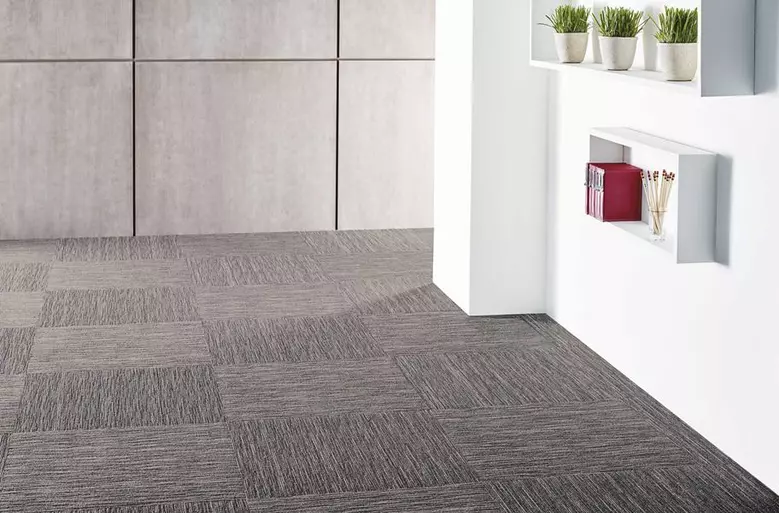
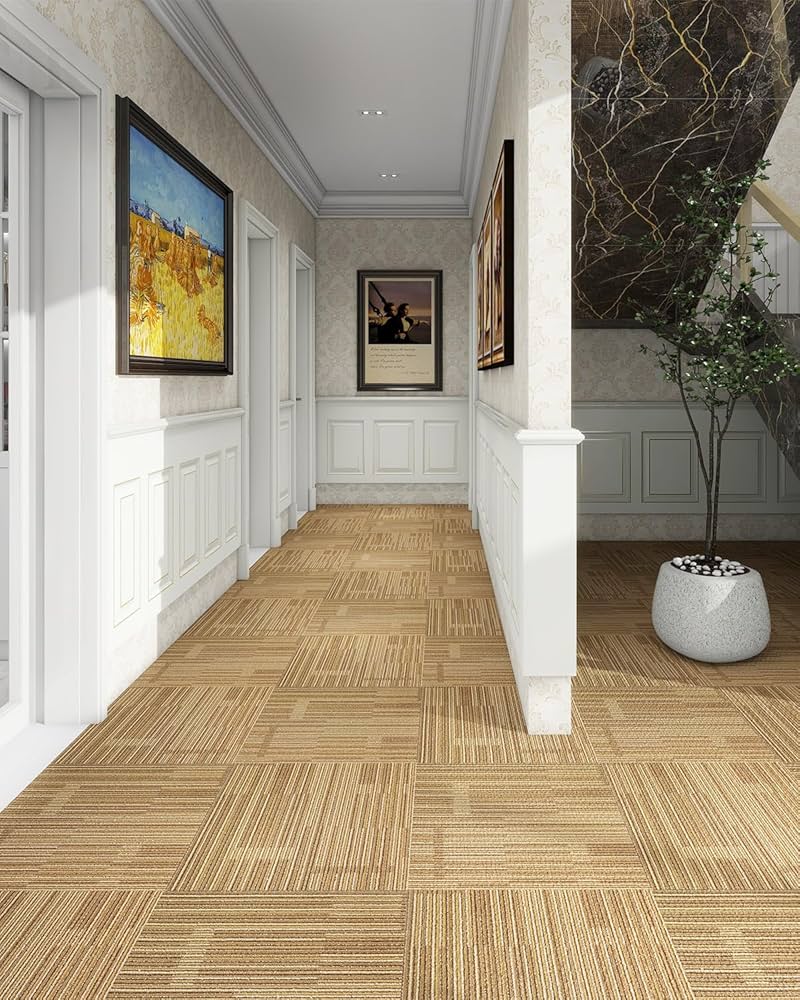
One of the biggest advantages of carpet tile is design flexibility. A good installer can use layout direction, quarter-turn patterns, brick patterns, ashlar patterns, or plank-style arrangements to change how a room feels. Pattern choice affects more than style. It can also influence how visible seams look, how traffic patterns show, and how the room visually flows.
In commercial settings, the right layout can make a floor look sharper and more intentional. In residential settings, it can help a basement or office feel more finished and custom.
Carpet Tile vs Other Flooring Types
Carpet tile is not the perfect flooring for every room, which is why it helps to compare options. If you are looking for waterproof hard-surface performance in kitchens, entry areas, or full-home wood-look installs, review vinyl plank flooring installation. If you want classic natural character in dry living spaces, review hardwood floor installation. If you want an affordable wood-look option in dry rooms, see laminate floor installation. If you need a durable moisture-friendly hard surface for bathrooms, laundry rooms, mudrooms, and kitchens, explore tile floor installation.
But for offices, basements, rec rooms, home offices, rental spaces, and high-use rooms where section replacement is valuable, carpet tile remains one of the smartest options available.
Best Places for Carpet Tile Flooring
Office Spaces
Clean, professional, durable flooring that works well in work areas, meeting rooms, hallways, and shared commercial environments.
Finished Basements
A smart option where homeowners want warmth, comfort, and replaceable modular flooring in lower-level living areas.
Home Offices
Comfortable underfoot, visually sharp, and practical for rooms where desks, rolling chairs, and daily use all matter.
Retail & Reception Areas
Useful in customer-facing environments where traffic is steady and appearance still needs to stay polished.
Rental & Multi-Unit Properties
Modular replacement flexibility can make carpet tile especially practical between tenants or after isolated damage.
Playrooms & Rec Rooms
Softness, warmth, and replacement flexibility make carpet tile a strong option in active family spaces.
Explore More Flooring Services Across West Michigan
Comparing flooring types or service areas? These related pages help strengthen your site structure while making it easier for visitors to find the right flooring solution for their room, property type, and location.
Core Service Pages
Main Local Pages
Grand Rapids Flooring Pages
Helpful Site Pages
Authoritative Carpet & Flooring Resources
These resources help reinforce why substrate prep, maintenance planning, installation quality, and product selection matter:
- FCICA — floor covering installation knowledge and industry support
- Carpet and Rug Institute — carpet industry education and certification information
- CFI — certified floorcovering installer training resources
- IICRC — cleaning and restoration education relevant to long-term floor care
- ASTM International — standards referenced across building materials and testing
- OSHA — workplace and walking-surface safety information
- This Old House Flooring — homeowner education on flooring types and applications
- HGTV Flooring Guide — flooring comparison education
- National Weather Service — helpful context for Michigan weather and basement/entry flooring planning
Carpet Tile Installation FAQ
Is carpet tile a good choice for basements?
In many finished basements, yes. The right fit depends on the specific room conditions, substrate, and moisture awareness plan.
Can damaged carpet tiles be replaced individually?
Often yes. That is one of the biggest advantages of modular carpet systems compared with wall-to-wall carpet.
Is carpet tile only for commercial spaces?
No. Carpet tile is widely used in offices, but it is also a strong option for basements, home offices, rec rooms, playrooms, and rental properties.
How long does carpet tile installation usually take?
Many projects are completed in 1 to 2 days, but timing depends on square footage, room layout, prep work, and the installation system being used.
Can carpet tile be installed over concrete?
Yes, in many cases, but the slab still needs proper evaluation, prep, and moisture consideration first.
What flooring should I compare carpet tile against?
That depends on the room. Compare carpet tile with vinyl plank flooring, laminate flooring, hardwood flooring, and tile flooring depending on moisture, comfort, and maintenance priorities.
Get a Free Carpet Tile Installation Quote
Need commercial carpet tile, basement carpet tile, or modular flooring for a high-traffic room in Grand Rapids, Jenison, Grandville, Hudsonville, Wyoming, Kentwood, Walker, Holland, Zeeland, or nearby West Michigan? Let’s map out the right product, prep, pattern, and installation strategy for your space.
Serving Grand Rapids, Jenison, Grandville, Wyoming, Kentwood, Hudsonville, Walker, Holland, Zeeland, Allendale, Byron Center, Cascade, and nearby West Michigan communities.
Explore More Flooring Installation Services
Browse flooring installation services across Grand Rapids, Jenison, Grandville, Hudsonville, and West Michigan. Compare flooring types, explore service areas, and learn which flooring works best for your space.
Main Flooring Services
Grand Rapids Flooring Pages
West Michigan Service Areas
Compare Flooring Types
Helpful Pages
Serving Grand Rapids, Jenison, Grandville, Wyoming, Kentwood, Hudsonville, Walker, Zeeland, Holland and surrounding West Michigan communities.